






Outdoor Privacy Screens Hit $3.16 Billion: Why Aluminum Batten Systems Are the 2026 B2B Choice
Outdoor privacy has quietly become one of the fastest-moving categories in residential and commercial landscaping — and the numbers confirm it. The global outdoor privacy screen market is estimated at $3.16 billion in 2026 and is projected to reach $5.78 billion by 2035, growing at a 6.3% CAGR (Business Research Insights). North America accounts for roughly 40% of demand, Europe 30%, and Asia-Pacific 25%.
Behind the statistics is a visible shift in buyer behavior: property owners are no longer treating privacy as a fence afterthought, but as a design feature worth investing in. In both architecture and landscaping, the aluminum batten screen has emerged as the system of choice — a vertical rhythm of aluminum blades that delivers privacy, airflow, shade, and facade-level aesthetics in a single product. For distributors, landscape contractors, and facade builders, this category is redefining what "screening" products can be sold for.
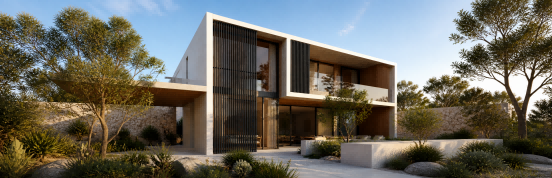
Three Structural Forces Behind the Privacy Screen Boom
The market growth is not a fad — it is the result of three converging structural forces:
1. Urban density is compressing property lines
As cities densify, new homes and multi-unit developments sit closer together. Balconies face balconies, patios face neighbors, and second-floor windows overlook backyards. Privacy has moved from "nice to have" to a primary purchase trigger for outdoor renovations — and it is a problem that no fence alone can solve at every level of the property.
2. The outdoor living investment wave continues
Homeowners and developers are spending more on outdoor space than ever. The North American outdoor aluminum pergola market alone is expanding from $1.2 billion (2024) toward $2.0 billion by 2033 at a 6.7% CAGR (Verified Market Reports) — evidence that fully furnished, design-conscious outdoor rooms are now standard expectations. Every outdoor room needs a privacy boundary, and batten screens are increasingly specified as part of the original design, not an afterthought.
3. The batten facade has migrated from commercial to residential
Vertical aluminum battens were once a signature of commercial facades and hotel architecture. That aesthetic has now crossed over into residential design — from front entrances to courtyard partitions. Buyers want the same architectural rhythm on their own property, and modular aluminum batten systems deliver it at a fraction of site-built cost.
"Privacy has become a design feature. The batten screen's appeal is that it gives buyers a wall that doesn't feel like a wall — light, air, and shadow still move through it."
What End Customers Are Actually Asking For
Across the US, Australia, and Europe, the same customer conversations repeat in landscape and renovation projects:
"My neighbor can see straight into our patio." Adjacent properties, elevated windows, and shared boundaries make screening a must — not an option.
"We want privacy, but we don't want to feel boxed in." Solid panels block views but also block breeze, light, and views outward. Batten spacing provides controlled screening with natural airflow — the balance buyers increasingly demand.
"Can you hide the air-conditioner and the bins?" Pool equipment, AC condensers, bins, and service areas are the fastest-growing screening use case. A 1.8–2.4 m batten screen panel turns an eyesore into a design feature.
"It has to look like part of the house." Finish and rhythm matter: powder-coated matte black, dark grey, and wood-grain battens match contemporary architecture and landscaping.
These demands map directly onto what a well-designed aluminum batten system provides: vertical blades, controlled spacing, architectural finishes, and modular installation.
The B2B Sourcing Reality: Four Problems in the Screening Supply Chain
For distributors, landscape contractors, and facade installers, the category's growth exposes supply-side friction that quietly erodes margin:
| Pain Point | What's Happening | Impact on You |
|---|---|---|
| SKU fragmentation | Every project needs different batten sizes, spacing, and brackets; buyers juggle profiles, channels, and hardware from separate vendors | Three MOQs, three lead times, and inventory that never matches the next job |
| Installation complexity | Site welding and cutting slow down projects and need skilled labor that is hard to find | Higher install cost, scheduling risk, and callbacks that eat margin |
| Finish inconsistency | Powder-coating batch variations across suppliers create visible color mismatch between blades, frames, and brackets | Rejected installations and reputation damage on architect-specified projects |
| Supply and tariff uncertainty | 2026 aluminum price volatility and US tariff changes make landed cost unpredictable for China-origin supply | Quotes that expire before purchase orders are signed |
The pattern is clear: the market is growing, but the old way of buying screening products — piecemeal, from multiple uncoordinated suppliers — is exactly what turns that growth into margin erosion.
What Forward-Looking Buyers Are Doing Now
Leading distributors and contractors are repositioning around three strategies:
1. Buy systems, not parts
Instead of sourcing blades from one mill and channels from another, buyers are consolidating on complete system packages: extrusion profiles, batten blades, slat channels, brackets, and post hardware from a single factory. One MOQ, one lead time, one color batch, one landed cost.
2. Specify modular, DIY-friendly designs
Bolt-together systems with pre-drilled profiles and stainless steel fasteners cut installation time dramatically and remove the skilled-labor bottleneck. Contractors can quote faster; distributors can sell to a wider installer base. This is the same logic that has made modular vertical blade fencing a fast-growing category.
3. Prioritize supply-chain stability over origin price
After a year of aluminum price spikes, Gulf supply disruption, and shifting US tariffs, buyers increasingly treat origin stability as part of the product spec. Thailand-origin aluminum carries no US anti-dumping exposure, avoids Middle East shipping lanes, and offers complete origin documentation — the same factors driving the broader repositioning of the 2026 privacy fence market.
Royal Metal Company Limited supplies buyers executing precisely these strategies — manufacturing aluminum batten screen systems and facade privacy screens in fixed, sliding, and folding configurations, with 6063-T5 alloy, powder-coated or anodized finishes up to C5 marine grade, and full modular component support — all from our Thailand manufacturing base.
Market Outlook: The Next 12–18 Months
Several signals point to continued acceleration for the batten screen category:
Multi-unit housing and balcony regulations: As apartment and condo development grows in North America and Australia, balcony privacy and screening are increasingly written into project specifications, expanding the addressable market beyond single-family homes.
Outdoor living spend holds steady: Renovation demand remains resilient, and screening is one of the highest-ROI elements of an outdoor room — a factor that protects the category even in a softer housing cycle.
Aluminum's cost logic strengthens: With aluminum price volatility continuing, lightweight, logistics-efficient aluminum systems keep freight and handling costs lower than steel or composite alternatives — an advantage that grows as freight rates fluctuate.
Sustainability is becoming a spec item: Aluminum's 100% recyclability and low-maintenance lifecycle increasingly satisfy green-building requirements, giving aluminum batten systems an edge in tender evaluation.
Distributors and contractors who lock in modular system supply now will hold both a cost and a delivery advantage as project demand builds through 2027.
Is Your Screening Supply Ready for the Privacy Boom?
Three questions for distributors, landscape contractors, and facade builders evaluating their product line:
Can you supply a complete batten system, or only loose parts? System sellers win projects; parts suppliers compete on price.
Is your install model modular? If every job requires welding and skilled labor, your capacity ceiling is lower than your competitors'.
Is your origin defensible? If a customer or customs audit asks where your aluminum was extruded and finished, can you document it?
Royal Metal Company Limited manufactures aluminum batten screen systems, facade privacy screens, and matching extrusion profiles from our Thailand base — with modular component support, C5-ready finishes, and complete origin documentation. If you are building out your 2026–2027 screening line, we are ready to discuss your project requirements.
Contact: sales@royalaluminumtha.com | WhatsApp: +66-61-320-0192
Related Reading:
Get Inquiry
Recommended Products

Recent News
1.Efficient Heat Dissipation Starts Here: High-Performance Radiator Aluminum Profiles by Royal Metal
2025-04-232.Aluminum Balcony Railing Systems
2026-01-303.Save on Aluminum Duties: Royalmetal Thailand Factory Advantage
2026-04-204.OEM & Private Label Aluminum Gates and Fencing Manufacturer
2026-02-285.Aluminum Slat and Batten Fence Systems for Builders and Distributors
2026-05-296.Aluminum Privacy Screens for Modern Outdoor Living | Royal Aluminum
2026-06-057.2026 Aluminum Fence Trends: Privacy, Powder Coating & Stable Supply
2026-04-27