






Fence Manufacturing & Quality Inspection: A Complete Guide
Modern fences are more than security barriers—they combine functionality with aesthetic appeal. Whether for residential balconies, commercial spaces, or outdoor landscapes, a fence’s durability, structural stability, and visual appeal are critical.
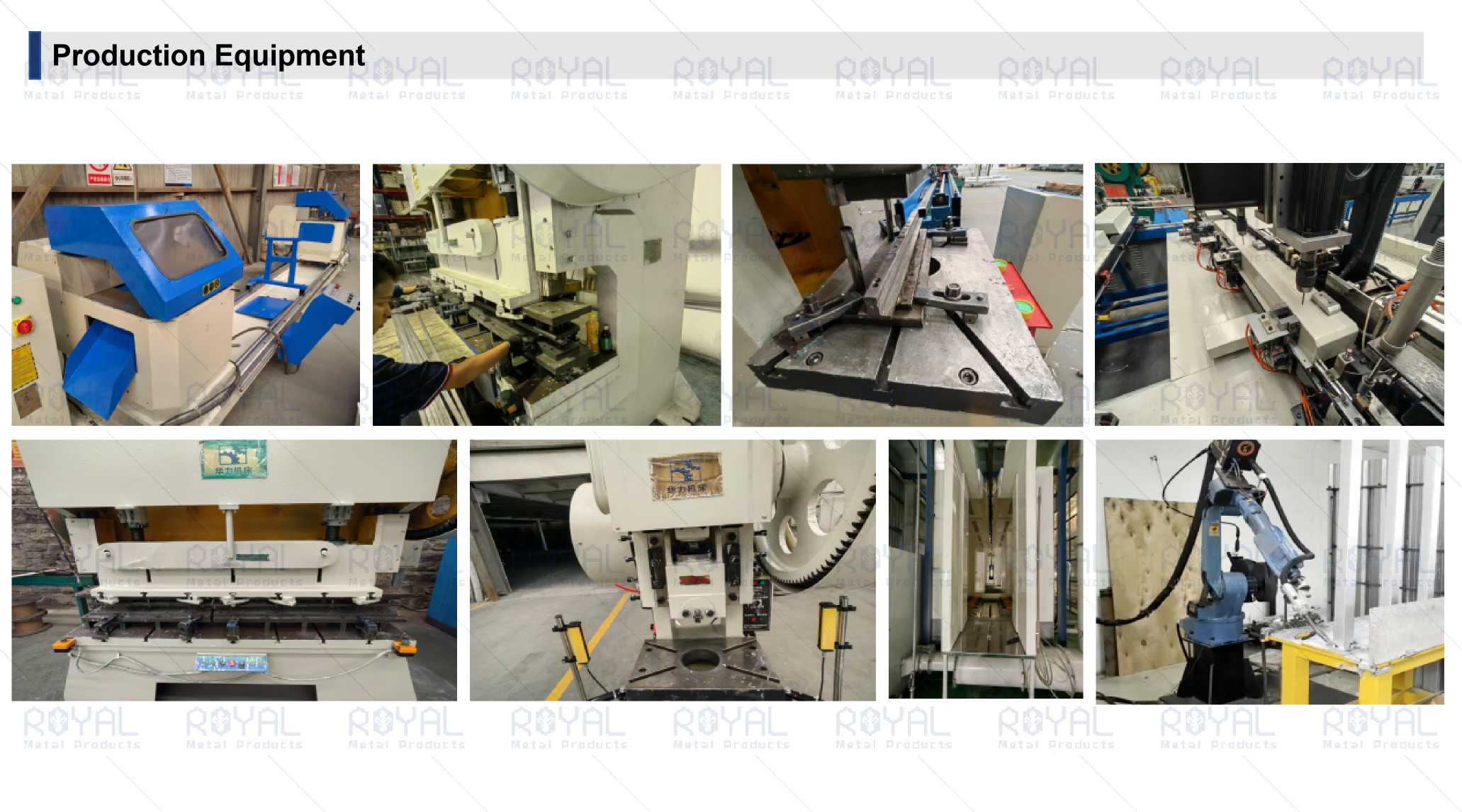
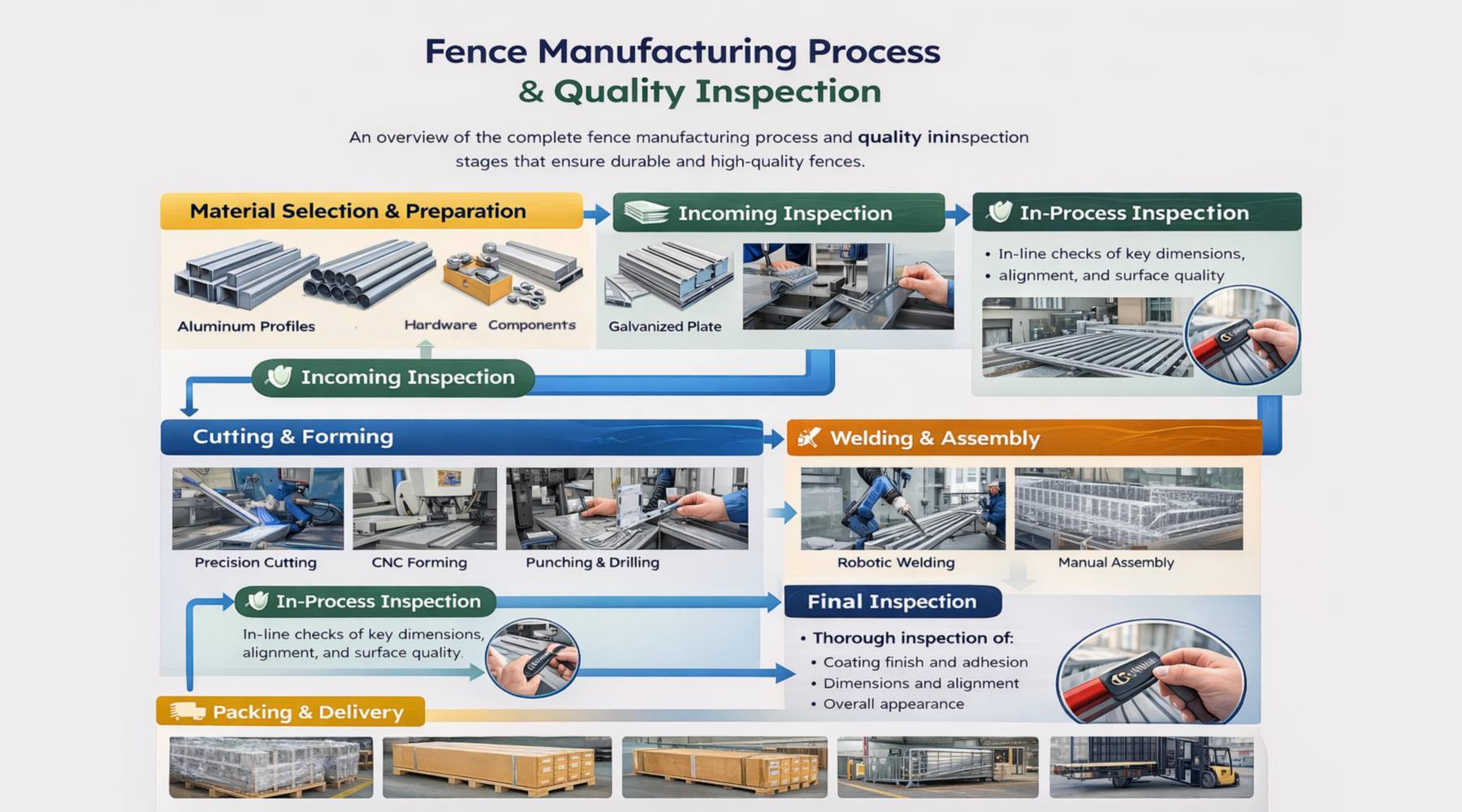
Fence Manufacturing Processes
Material Selection & Preparation
Aluminum Profiles: Lightweight, high strength, corrosion-resistant—ideal for outdoor applications.
Sheet Metal Panels: Can be customized with decorative designs, laser-cut or perforated.
Material Treatment: Includes degreasing, pickling, and surface protection to ensure high-quality results in later processes.
Cutting & Forming
Precision Cutting: Laser or CNC cutting ensures accurate dimensions and smooth edges.
Bending & Stretching: Maintains structural strength and aesthetic design.
Key Considerations:
Aluminum thickness typically 1.5–4mm; too thin may warp, too thick increases cost.
Minimum bending radius should be 1.5× material thickness to prevent cracking.
Welding & Assembly
TIG/MIG Welding: Ensures a strong structure with minimal deformation.
Bolts & Rivets: Used for modular or large-span fences for easy installation.
DIY Limitations: Certain welding tasks require professional equipment and skill.
Surface Treatment
Powder Coating: Durable, corrosion-resistant, with a wide range of colors.
Wood Grain Finishes: Combines metal strength with a wood-like appearance.
Tips: Surface must be clean and dry for proper adhesion, avoiding bubbles or peeling.
Fence Quality Inspection
Professional fence manufacturers follow strict quality inspection processes to ensure product safety and appearance.
1.Incoming Material Inspection
Check labels and material specifications
Test hardness and corrosion resistance
Preliminary visual and dimensional inspection
2.In-Process Inspection
Cutting and bending accuracy
Welding quality
Surface defects (scratches, dents, bubbles)
3.Final Product Inspection
Dimensional and assembly verification
Surface treatment and aesthetic quality
Functional tests: strength, stability, wind resistance
Quantity and packaging check
Why Choose a Professional Fence Manufacturer?
Safety & Compliance: Meets international standards, including anti-climb and child safety requirements.
Custom Design: Offers laser-cut, perforated, or wood-grain panels to match architectural style.
Durability: Every step from material selection to surface treatment is strictly controlled.
Engineering Support: Installation guidance and maintenance advice reduce post-installation costs.


